The Exhibit · 1619 — Present
Freedom
Way.
The Blueprint for African American Enslavement, Resilience, and Freedom from 1619 to the Present.
A month-long, immersive historical and artistic exhibition at Maryland Hall for the Creative Arts in June 2027, recognizing Juneteenth. Born from Dr. Craig Coates’ dissertation research, the exhibition tells the story of a people who resisted oppression, preserved their humanity, and expanded the meaning of American freedom.
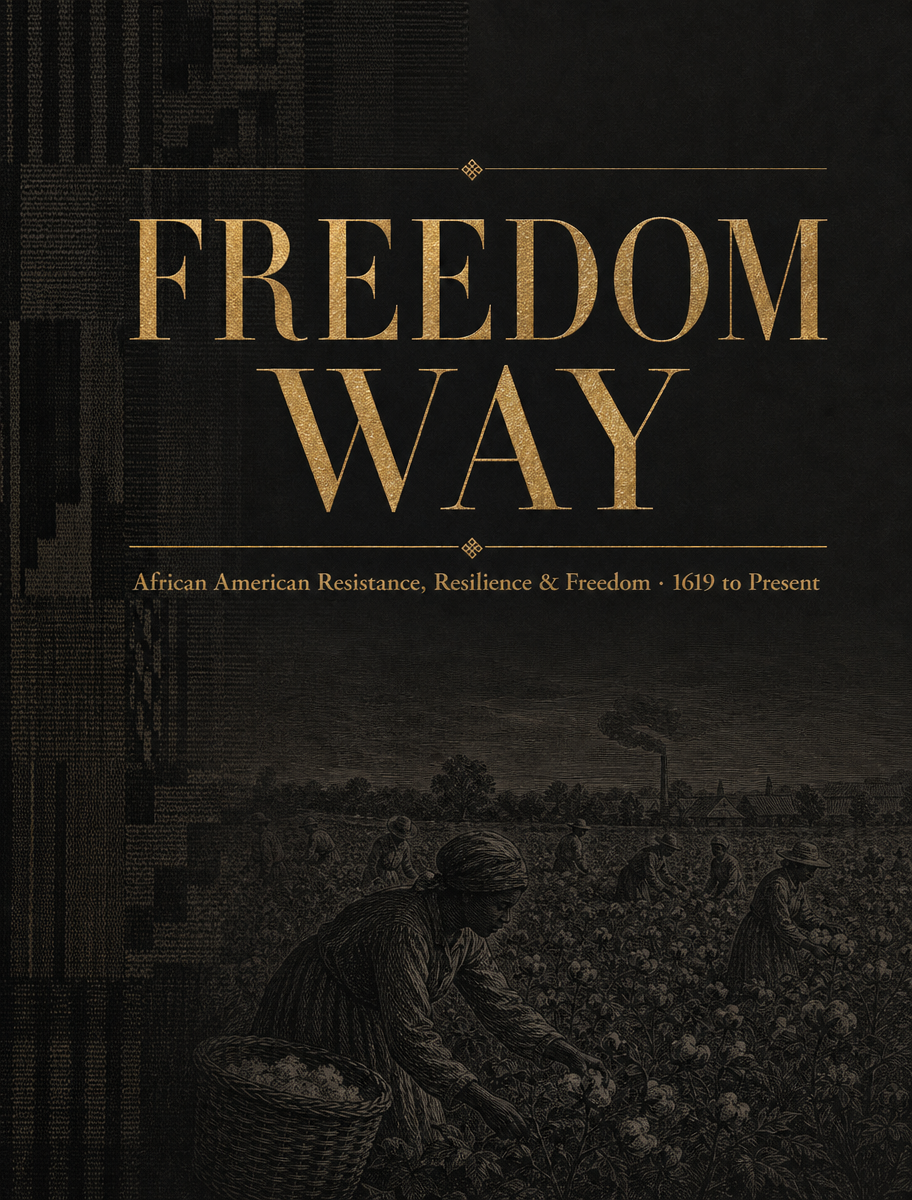
The Exhibition
A blueprint for
enslavement, resilience, and freedom.
Freedom Way: The Blueprint for African American Enslavement, Resilience, and Freedom from 1619 to the Present will be a month-long, immersive historical and artistic exhibition presented at Maryland Hall for the Creative Arts during June 2027 in recognition of Juneteenth.
The exhibition will tell the story of African Americans not merely as victims of enslavement, segregation, and discrimination, but as people who continually resisted oppression, preserved their humanity, built institutions, created culture, protected their families, challenged injustice, and expanded the meaning of American freedom.
Freedom Way will combine historical scholarship, visual storytelling, artistic interpretation, clothing, technology, spoken narration, and documentary media. Visitors will move chronologically through the exhibition, beginning with African civilizations and the transatlantic slave trade and continuing through slavery, emancipation, Reconstruction, segregation, the Great Migration, the Civil Rights Movement, and contemporary movements for equity and freedom.
Local History, National Story
Maryland &
Annapolis.
The exhibition will intentionally connect national history with Maryland and Annapolis history. Local stories will help visitors understand that the struggle between enslavement and freedom was not confined to distant plantations or southern states. It occurred in the streets, ports, homes, churches, farms, courthouses, and communities of Maryland.
One of the stories under development is that of Ayuba Suleiman Diallo, a highly educated Muslim man from West Africa who was captured, transported through Annapolis, and enslaved in Maryland during the eighteenth century. His story illustrates the education, religion, family structures, political systems, and cultural identities that enslaved Africans possessed before captivity. It also reveals the complicated relationships among enslavement, international commerce, religion, freedom, and the British Atlantic world.
Three Pillars
What the exhibit documents.
Resistance
Documented acts of refusal — legal, spiritual, artistic, and everyday. The record of a people who never fully consented.
Resilience
The institutions, families, crafts, and faith traditions that carried a community through centuries of engineered loss.
Freedom
Not a date, but a practice. The exhibit treats freedom as unfinished work — measured in generations, not proclamations.
The Walk
Four centuries, one path.
1619 — 1799
Arrival & Refusal
The first ships, the first refusals. Resistance begins the moment freedom is taken — in language kept, faith carried, and hands that would not forget how to make.
1800 — 1877
Rebellion & Reconstruction
Revolt, escape, war, and the fragile promise of Reconstruction. Freedom is declared, then contested — a legal fact chasing a lived reality.
1878 — 1964
Endurance & Migration
Jim Crow, the Great Migration, the church, the shop, the school. A people build institutions inside a nation that refuses them, and resilience becomes architecture.
1965 — Present
Voice & Vision
Movement, culture, creativity, and power. Freedom moves from protest to authorship — from demanding to be seen to defining what is seen.
From the Exhibit
The storyboards.
Panels from the traveling installation — archival photographs, primary documents, and testimony arranged so the record speaks for itself.
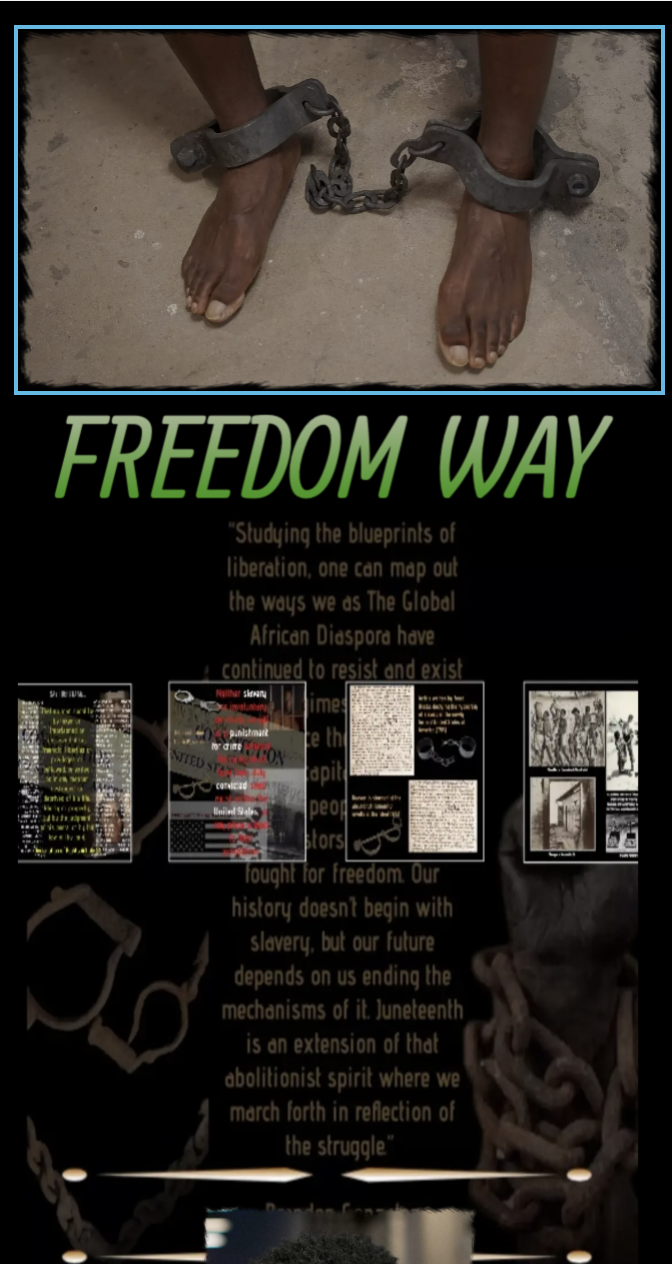
The opening panel: shackles, a curatorial statement, and the blueprints of liberation that frame the entire walk.
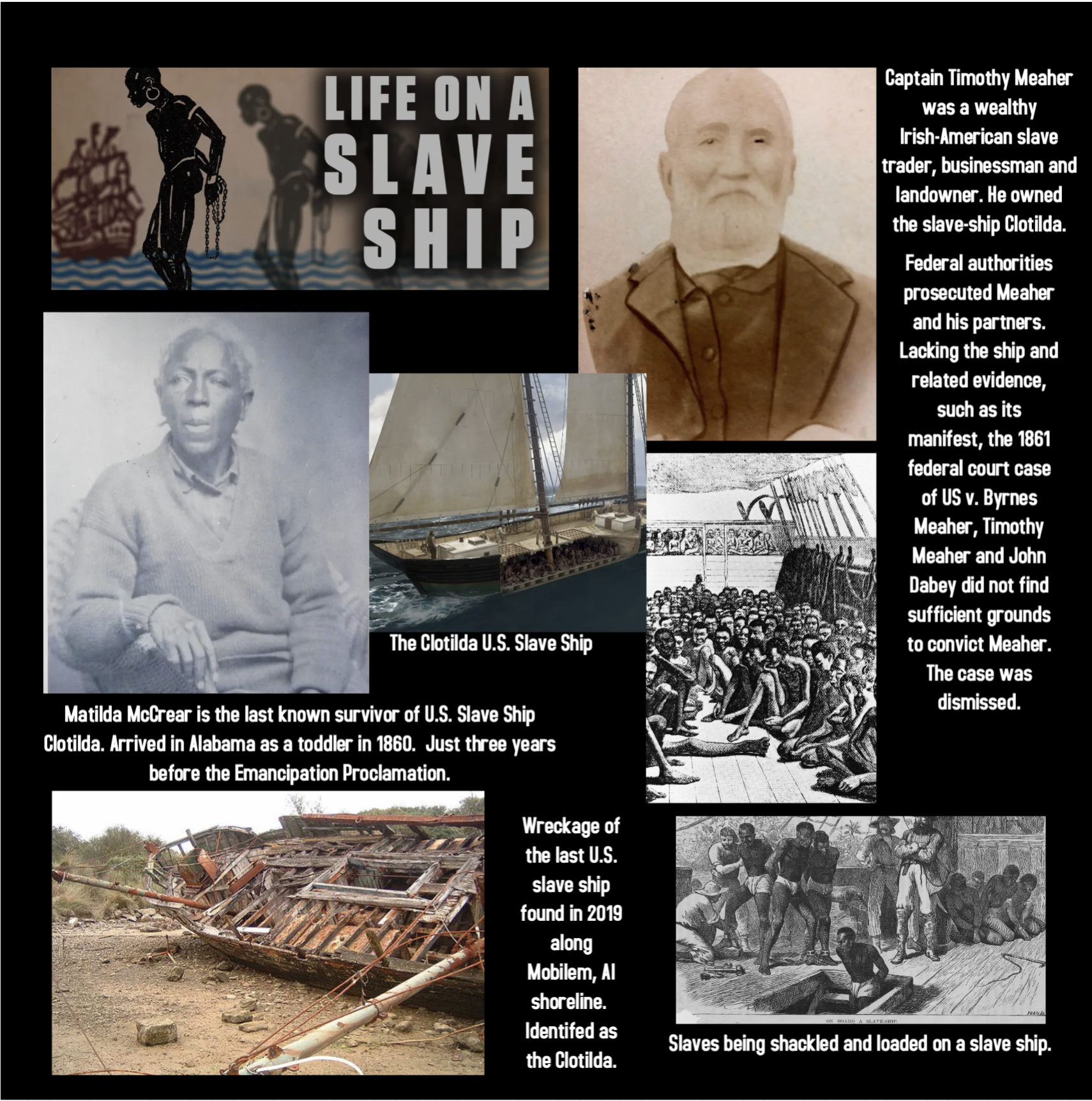
The Clotilda, the last known U.S. slave ship — its owner, its wreckage found in 2019, and the survivors who outlived it.
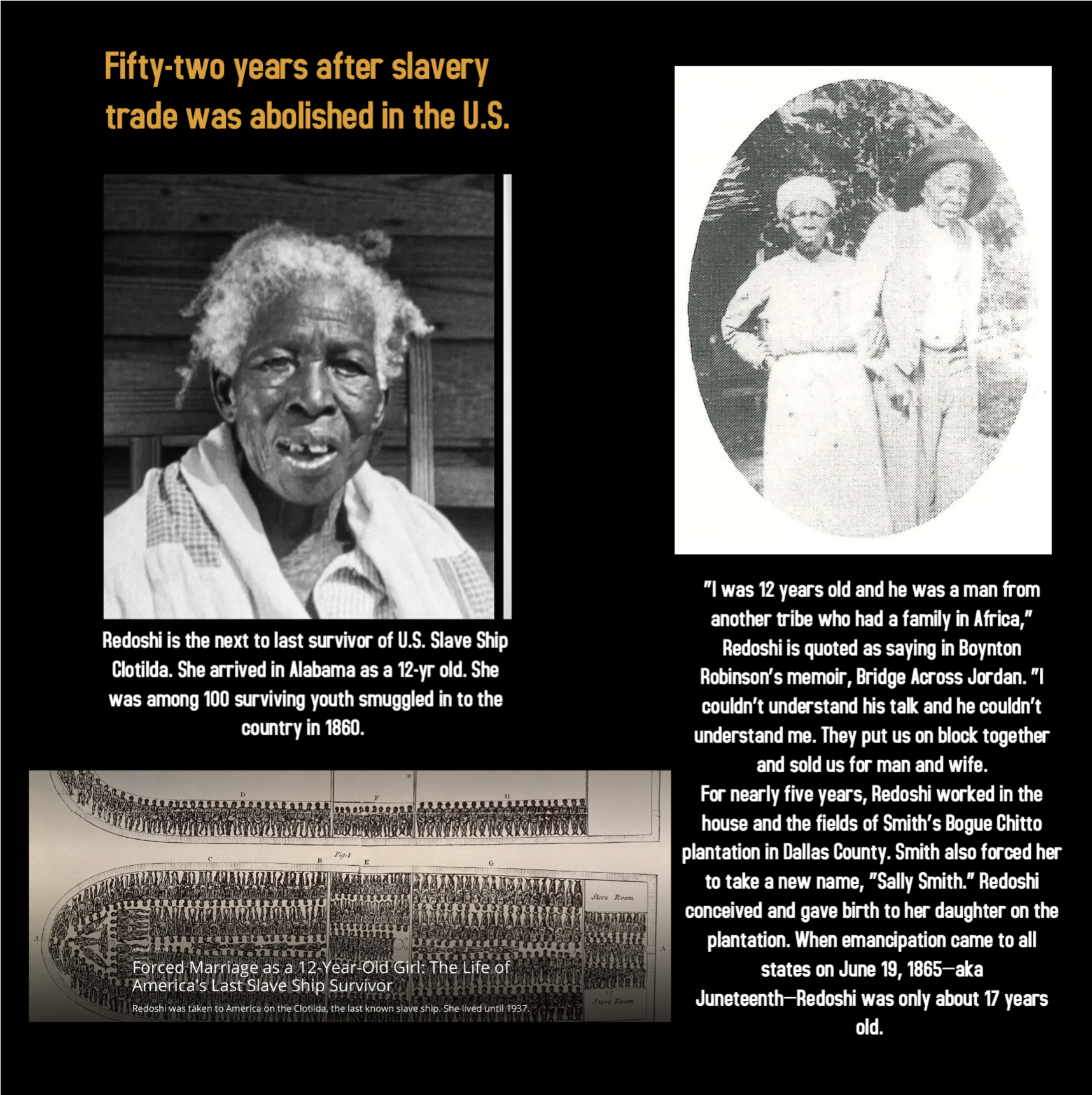
Brought to Alabama at twelve, renamed, and freed at seventeen. One life carrying the whole arc of the record.
“Freedom was never given on a single day. It has been made, and remade, every day since 1619.”
— Dr. Craig Coates
Bring Freedom Way to Your Space
Exhibitions, lectures, and residencies.
Freedom Way travels — to museums, universities, churches, and cultural institutions. Join the mailing list for tour dates, programming, and partnership opportunities.